Wednesday, 2 March 2011
Vietnam's 2011/2012 coffee output may drop-report


 http://bit.ly/htd030
In tense times, cocoa goes cuckoo


Higher prices depress cotton demand


 http://bit.ly/fFtUaU
Indonesia Sumatra Feb robusta coffee bean exports almost triple


 http://bit.ly/gk8bYx
Cocoa Prices Paid to Nigerian Farmers Advance to Record on Ivorian Crisis


Record cotton production in 2011/12 as response to record prices


 http://bit.ly/g0reN5
Coffee exports up by 47% to 53,905 tn in Jan-Feb


 http://bit.ly/eIFo42
Ghana raises cocoa main crop forecast


India Cotton Advisory Board revises 2010-11 cotton output downwards


 http://bit.ly/hLEYWm
UK: Dawson hit by higher cashmere and cotton prices


 http://bit.ly/h9tF5k
Cotton Futures Soar 161.3% This Year


 http://bit.ly/eAXQCq
Tuesday, 1 March 2011
Tokyo Futures Rise On Back Of Oil Rally


 http://bit.ly/hibbdG
SVR (Standard Vietnamese Rubber) Physical price on Mar 01 2011


 http://bit.ly/hezvXq
Tokyo rubber futures up


 http://bit.ly/ehXS6n
Rice reserve exceeds 1.5 million tons
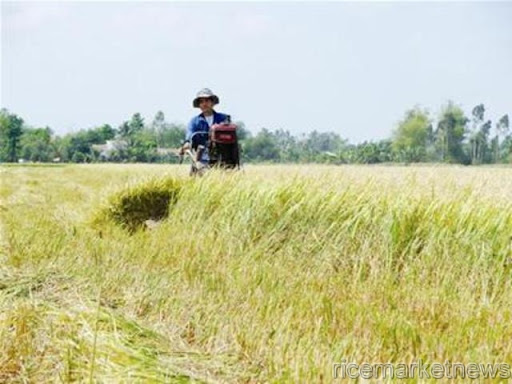 Korea's rice reserve exceeded 1.5 million tons in the 2010 food grain year, the highest reached since 1994, the government said Tuesday.
The Ministry for Food, Agriculture, Forestry and Fisheries said last year's reserve represents a gain of 52 percent, or 516,000 tons, from the year before and is due to a surge in local production and more rice brought into the country under the minimum market access arrangement (MMA).
Seoul secured an MMA deal with leading rice exporters in late 2004 to limit market access to cheap imports.
The drop in rice consumption also contributed to the rise in the reserve, it said. In 2010 an average South Korean consumed 72.8 kilograms of rice, down from 74.0 kilograms the year before.
The total is also twice as large as a reserve of 720,000 tons that policymakers said is adequate for dealing with emergency situations.
The country produced 4.91 million tons of rice from November 2009 to October 2010, a gain of 1.5 percent from the year before, although demand fell 1.8 percent to 4.70 million tons.
South Korea's rice reserve that stood at 1.44 million tons in 2002 fell to 832,000 tons in 2005 as Seoul started to provide rice assistance to North Korea, and fell further to 695,000 tons in 2007. The stockpile, however, started to rise to reach 993,000 tons in the 2009 food grain year as assistance to the North was cut off because of cool inter-Korean relations.
(Source: http://www.koreatimes.co.kr/www/news/biz/2011/03/123_82241.html)
Thai rice price to surge 13% on demand
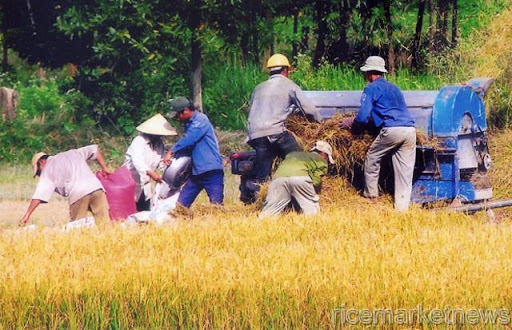 BANGKOK: The price of Thai rice, the benchmark for Asia, may climb 13% this year as demand from Indonesia and the Philippines boosts exports and tightens global supply, according to Thailand’s Foreign Trade Department.
Thai 5% white rice might climb to US$600 a tonne this year, Manat Soiploy, the department’s director general, said yesterday. The price has declined 0.9% so far this year, and was last at US$533 a tonne on Feb 23.
Rice, the staple food for half the world, has surged 50% from last year’s low as governments boosted stockpiles to curb rising domestic prices that contributed to protests in North Africa and the Middle East.
The May-delivery contract in Chicago gained as much as 1.7% to US$14.55 per 100 pounds. Futures reached a record US$25.07 in April 2008.
Exports from Thailand this year might rise as much as 5.2% to 9.5 million tonnes, Manat said. The country shipped 9.03 million tonnes in 2010, the Ministry of Commerce said.
The Philippines would open bids to import at least 1.5 million tonnes in the second and third quarters, while Indonesia and Bangladesh would continue importing rice to bolster inventories and strengthen food security, Manat said.
Indonesia and the Philippines are the world’s top two buyers after Nigeria, according to the US Department of Agriculture.
(Source: http://biz.thestar.com.my/news/story.asp?file=/2011/3/1/business/8159958&sec=business)
Rice export outlook good
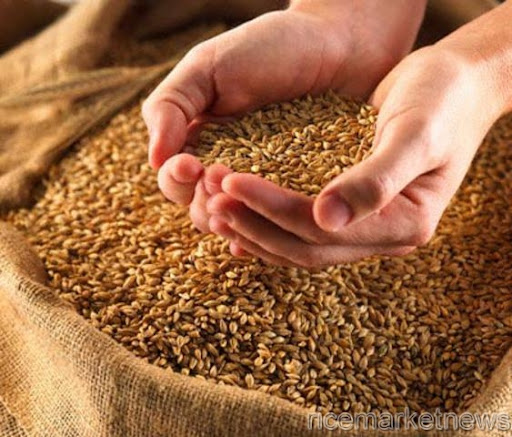 The Commerce Ministry expects rice sales through government-to-government channels will increase dramatically to 700,000-800,000 tonnes this year.
The amount will help drive rice shipments above nine million tonnes as forecast while raising the ministry's exports after last year when it did not sell a single grain of rice.
Manat Soiploy, director-general of the ministry's Foreign Trade Department, said several governments from the Middle East, Africa and Asia have contacted the ministry recently about purchasing plans to beef up their food security.
There are buying offers from Iran, Iraq, Libya, Indonesia, Bangladesh and the Philippines that will add up to government-to-government rice deals of more than 700,000 tonnes, he said.
He said Thai rice would benefit from falling rice supplies in many major producing countries, especially China, due to drought, while India has banned the export of non-basmati rice.
The strong market is likely to prop up export prices. Mr Manat expects the price of 5% grade white rice may increase significantly to about US$600 a tonne due to high demand.
Thailand plans to ship out 9-9.5 million tonnes of rice this year to fetch income of up to $5.6 billion, up from 9.05 million tonnes worth $5.34 billion last year.
(Source: http://www.bangkokpost.com/business/economics/224036/rice-export-outlook-good)
Philippines plans to import 800,000 tons of rice this year
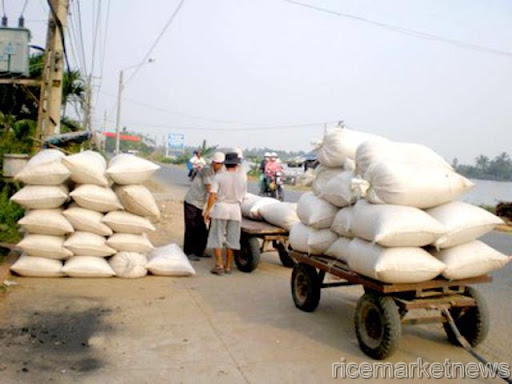 LOS BAÑOS, Laguna, Philippines (Reuters) – The Philippines plans to import around 800,000 tonnes of rice this year even if a government council allowed purchases of up to 1.3 million tonnes, the agriculture secretary said here.
The planned purchases would be just a third of the record 2.45 million tonnes of rice Manila bought last year.
But hefty stockpiles and expectations of strong local output this year have allowed the government to cut its imports of its main staple, thus tempering domestic food inflation, which has created problems for policymakers around the region.
Agriculture Secretary Proceso Alcala told Reuters he prefers the private sector to bring in the bulk, or 600,000 tonnes, of this year's planned rice purchases starting in the period from May to June.
''This year, we will import more or less only 800,000 or just one-third of last year,'' Alcala said as he inspected new rice varieties at the International Rice Research Institute's facilities in Laguna province, south of the capital, Manila.
''In the last National Food Authority council meeting, the limit of 1.3 million tonnes this year was approved. But my stand is we won't buy all of it,'' he said.
The Philippines – the world's biggest rice buyer in recent years – wants to cut its 2012 imports by half of this year's figure, or about 400,000 tonnes before it achieves its goal of rice self-sufficiency by 2013, Alcala said.
He did not say when the government would launch a tender for private sector rice import rights. The private sector's purchases are tariff-free, but the traders instead pay a service fee to the NFA for bringing in rice.
(Source: http://www.mb.com.ph/articles/306776/philippines-plans-import-800000-tons-rice-year)
Indonesia, Asean Move to Ease Rice Supply Fears

Plentiful supply has capped rice prices even as some Asian buyers boosted purchases amid concern about food security as other grain prices raced to multi-year highs.
High prices have stoked global inflation, putting the rising cost of food high on policymakers' agendas.
"Our rice stock now is enough to cover our needs for the next six months," said Sutarto Alimoeso, head of Indonesia's state procurement agency Bulog.
"Besides, we are now entering the domestic harvest season and Bulog has been starting to buy locally," he said. Bulog had bought 86,000 tonnes of rice from the domestic market last month, he added.
Sutarto said earlier last month that Bulog aimed to raise rice stocks to 2 million tonnes from 1.5 million tonnes by the end of the year via domestic procurement, because of expected higher production.
Indonesia surprised markets in January by buying 820,000 tonnes, or nearly five times as much rice as expected, lifting regional prices, and then suspending rice import duties in a move that signalled it could be looking to stockpile more.
This added to concern that tightening fundamentals in the rice market might drive prices higher.
Further reflecting this worry, South-east Asian countries, China, Japan and South Korea plan to build a rice reserve to guard against volatile commodity prices.
The countries agreed at a two-day meeting in Laos over the weekend to establish rice reserves of around 787,000 tonnes, to help stabilize costs after global food prices surged to a record in January, said Gusmard Bustami, a senior official at Indonesia's Trade Ministry.
"We are very concerned with food security. We know we must handle price increases that have led to the rise in food prices together with other countries," he said via telephone from Vientiane yesterday, after a meeting of the economic ministers of Asean and the three North-east Asian countries.
Traders said the targeted stockpile is too small to have an impact on the market.
It was reported that the group aims to sign the rice agreement in October, with China to provide 300,000 tonnes; Japan, 250,000 tonnes; and South Korea, 150,000 tonnes.
Trade Minister Mari Pangestu, chair of the meeting, said Asean countries should not repeat their 2008 moves, when worries over a food crisis led to panic buying and Vietnam suddenly limiting its rice exports, Indonesian newspapers reported.
In the Philippines, Agriculture Secretary Proceso Alcala said the government may import around 800,000 tonnes of rice this year. The planned purchases would be just a third of the country's record 2.45 million tonnes bought last year.
Better rains and a possible good harvest give it reason to renew a goal of rice self-sufficiency by 2013.
Prior to its import cuts this year, the country was the world's biggest rice buyer.
Reuters
(Source: http://www.thejakartaglobe.com/business/indonesia-asean-move-to-ease-rice-supply-fears/425878)
DA – Rice sufficiency anticipated before end of year 2013
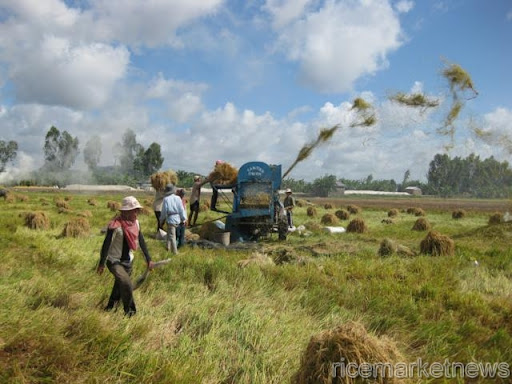 ZAMBOANGA CITY, Philippines – Rice sufficiency in the country is expected to be achieved before the end of 2013, Department of Agriculture (DA) Secretary Proceso Alcala announced here over the weekend.
Alcala, who recently visited Jolo, Sulu, and Zamboanga City, disclosed that the DA is initiating appropriate measures to increase production and attain its cereal generation goal within three years.
Among these steps, Alcala said, include improving and building more irrigation systems, developing better variety of seeds, production of enough post-harvest facilities like dryers, and conducting more training and seminars to farmers.
“On the training of farmers, they will be taught about the conventional and organic system of farming,” Alcala added.
He said he has directed all DA field officials to give top priority in increasing the production of the staple food so that the Philippines will decrease its dependency on rice importation from Vietnam and Thailand, whose agricultural technicians ironically learned the latest farm techniques in rice production from the Philippines, particularly from the Los Baños, Laguna-based International Rice and Research Institute (IRRI). (Tony Pe. Rimando)
(Source: http://www.mb.com.ph/articles/306890/da-rice-sufficiency-anticipated-end-year-2013)


