Monday, 7 March 2011
Rice witnesses mixed trend
 KARNAL, MARCH 7:
The rice market witnessed a mixed trend; prices of Pusa 1121 continued to tumble in the domestic market, while the prices of non-basmati and other aromatic varieties witnessed a steady trend.
Mr Amit Chandna, proprietor of Hanuman Rice Trading Company, said sluggish domestic demand against ample stocks led the prices of Pusa 1121 downwards while the other varieties managed to rule firm. There is no bulk buying in the market, retail traders are also buying in limited quantity as the prices are falling continuously, he added.
On Monday, prices of Pusa 1121 rice (steam) dropped by Rs 30-40 and ruled at Rs 5,180-5,220 a quintal, Pusa-1121(sela) ruled at Rs 4,200-4,320, and Pusa-1121(raw) at Rs 5,100-5,130. Basmati (sela) was sold at Rs 6,200 and basmati (raw) at Rs 7,300-7,325. Prices of duplicate basmati ruled at Rs 3,970-4,050 a quintal.
Prices of broken varieties of aromatic and non basmati continued to rule flat. Brokens such as Tibar was quoted at Rs 3,000-3,500, Dubar at Rs 2,200-2,600 and Mongra was at Rs 1,900-2,100.
Sharbati (sela) quoted at around Rs 2,600-2,680 while the Sharbati (steam) at Rs 3,000-3,150.
Permal (sela) ruled at Rs 1,900-2,110 and Permal (steam) was at Rs 2,100-2,175 a quintal. For the brokens of Sharbati variety, Tibar was quoted at Rs 2,450, Dubar was at 2,100 and Mongra was at Rs 1,470.
Paddy Trading
About 180 bags of Pusa (duplicate basmati) arrived and were sold at Rs 2,100-2,270 a quintal and around 170 bags of Pusa-1121 at Rs 2,100-2,380 a quintal. Around 200 bags of pure basmati arrived and were sold at Rs 2,200-2,650 a quintal.
(Source: http://www.thehindubusinessline.com/markets/commodities/article1517498.ece)
Rice exporters demand floor price for non-basmati varieties
 Rice exporters are miffed with the government’s decision to allow export of superior non-basmati rice varieties—Sona Masuri, Ponni Samba and Matta—without a minimum export price (MEP).
They contended this would encourage shipment of inferior varieties and would tarnish the image of the country. In a representation to Prime Minister Manmohan Singh, the All India Rice Exporters Association has said a recent notification issued by Directorate General of Foreign Trade (DGFT) does not clearly reflect the decision of the empowered group of ministers (eGoM) on food, as it does not mention the MEP of $850 per tonne for export of 3 non-basmati varieties.
“The eGoM had allowed export of Sona Masuri, Ponni Samba and Matta with an MEP of $850 per tonne, but the DGFT notification issued on February 10 does not talk about the price,” the Association’s president Vijay Sethia said.
The notification in its current form allows export of these three varieties at any price that the exporters want.”These non-basmati rice exports without MEP will adversely affect domestic prices and will encourage hoarding, profiting and malpractices,” he said.
Seeking amendment to the notification, Sethia said, “Without an MEP, exporters can ship any rice in the name of these three varieties. There should be a “special price” if we are exporting “superior varieties” of non-basmati rice”.
They said this would compromise on the quality which would not bode well for the country’s exporters.
An MEP helps to get better price for the grain in the global market and this will in turn benefit farmers, he said. Sethia observed the government’s export policy of providing adequate price —with MEP of $900 per tonne on basmati rice is a success with good offtake.
“Export of around 2 million tonne basmati rice is not affecting the domestic supplies. In a similar way, an MEP of $850 a tonne for these 3 varieties will not put pressure on the domestic prices,” Sethia noted.
Philippines to maintain 30-day rice stockpile
 MANILA, Philippines - The National Food Authority (NFA) plans to start this month its tender for the importation of 660,000 metric tons of rice, administrator Angelito Banayo said.
The NFA official said the agency must hold the rice tender this month so that the rice can arrive by June or July when the lean months for rice production begin.
Testifying before the Senate committee on agriculture and food, Banayo said that the a decision was reached to import an initial 860,000 metric tons, of which 660,000 MT would be imported by the private sector and the NFA 200,000 MT.
However, he said the Inter-Agency Committee (IAC) had recommended the importation of up to 1.3 million MT.
The NFA, Banayo said, is just awaiting the approval by the Fiscal Incentives Review Board (FIRB) of the Department of Finance of the use of the Tax Expenditure Fund (TEF) for the private sector importation.
The TEF, in effect, would subsidize the tariff duties for the rice importation to be made by the private sector.
The private sector, this time around, however would bid for the service fee to be paid to the NFA which would still be the importer on record.
In the past, the NFA charged a service fee of only P25 per bag of rice.
The NFA also plans to import on its own another 200,000 MT.
However, Banayo did not rule out the possibility of additional imports in the face of increasing global grains prices and food security concerns.
(Source: http://www.abs-cbnnews.com/business/03/07/11/philippines-maintain-30-day-rice-stockpile)
Traders miffed at non-basmati export without MEP

Rice exporters are miffed with the government’s decision to allow export of superior non basmati rice varieties - Sona Masuri, Ponni Samba and Matta - without a minimum export price (MEP).
They contended this would encourage shipment of inferior varieties and would tarnish the image of the country.
In a representation to Prime Minister Dr Manmohan Singh, the All India Rice Exporters Association has said a recent notification issued by Directorate General of Foreign Trade (DGFT) does not clearly reflect the decision of the empowered group of ministers (EGOM) on food, as it does not mention the MEP of $850 a tonne for export of 3 non-basmati varieties.
“The EGOM had allowed export of Sona Masuri, Ponni Samba and Matta with an MEP of $850 a tonne, but the DGFT notification issued on February 10 does not talk about the price,” the Association’s President Mr Vijay Sethia told PTI. The notification in its current form allows export of these three varieties at any price that the exporters want.
“These non-basmati rice exports without MEP will adversely affect domestic prices and will encourage hoarding, profiting and malpractices,” he said.
Seeking amendment to the notification, Mr Sethia said, “Without MEP, exporters can ship any rice in the name of these three varieties. There should be a “special price” if we are exporting “superior varieties” of non-basmati rice”.
They said this would compromise on the quality which would not bode well for the country’s exporters. An MEP helps to get better price for the grain in the global market and this will in turn benefit farmers, he said.
Mr Sethia observed the government’s export policy of providing adequate price - with MEP of $900 a tonne on Basmati rice is a success with good offtake.
“Export of around 2 million tonnes of basmati rice is not affecting the domestic supplies. In a similar way, an MEP of $850 a tonne for these three varieties will not put pressure on the domestic prices,” Mr Sethia noted.
Domestic prices will not increase as the government has enough foodgrains stock in its godowns, he added.
(Source: http://www.thehindubusinessline.com/industry-and-economy/agri-biz/article1516863.ece)
Thai Committee Approves Benchmark Rice Price Increase on Costs
 Thailand’s National Rice Policy Committee approved an increase in benchmark domestic prices by up to 10 percent for rice under an income guarantee program after complaints by farmers about rising costs, Pramote Vanichanont, a committee member, said today.
The increase in the benchmark price, which is subject to final approval from the cabinet, will raise total government spending on rice under the income guarantee program to 55 billion baht ($1.8 billion) from 40 billion baht planned earlier, Pramote said. The government will pay the difference to farmers if domestic prices are below the benchmark level.
Thailand raises guaranteed prices of rice paddy
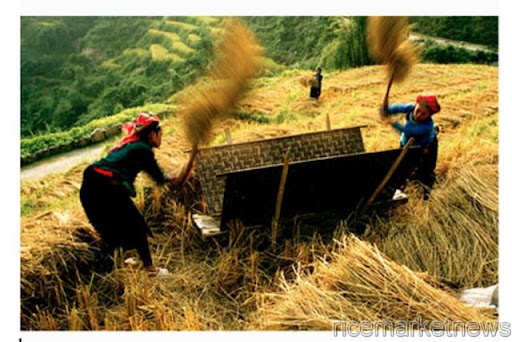 BANGKOK, March 7 (Xinhua) -- Thai government on Monday raised its guaranteed prices of rice paddy in response to rising production cost of farmers, a senior official said.
The national rice policy committee meeting chaired by Prime Minister Abhisit Vejjajiva decided to increase its guaranteed prices of rice paddy to 11,000 baht (360 U.S. dollars) per ton from the current 10,000 baht (328 dollars), according to Yangyong Phuangrach, permanent secretary to the Commerce Ministry.
For a higher quality strain of paddy, the guaranteed price is raised to 11,500 baht (377 dollars) per ton from 11,000 baht, Yangyong was quoted as saying by the English-language Bangkok Post online.
The price of sticky rice is also raised to 10,000 baht per ton from the current 9,500 baht (311 dollars).
Each farmer household will now be entitled to have 30 tons of rice paddy guaranteed under the scheme, from the current 25 tons, Yangyong said.
He said the government would need 30 billion baht (984 million dollars) for the new price guarantee scheme.
(Source: http://news.xinhuanet.com/english2010/world/2011-03/07/c_13765727.htm)
Sunday, 6 March 2011
Coarse rice price rose by 31pc in a yr
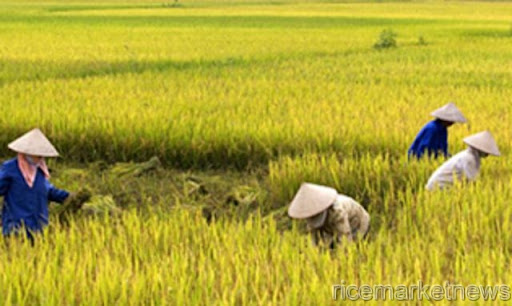 The prices of coarse rice shot up by more than 31 percent and wheat by 48 percent in the last one year, Commerce Minister Faruk Khan told parliament yesterday.
In response to queries from lawmakers in the House, the minister said palm and soybean oil saw an increase in their prices by 60 and 45 percent whereas the prices of lentil, onion and potato fell by 7.5, 12 and 36 percent.
Faruk said the price of coarse rice now stands at Tk 34 to 37 a kg, which was Tk 26 to 28 a year ago. Wheat is sold for Tk 32 to 36 that was Tk 21 to 25 a kg on retail market a year back.
The price of palm oil was Tk 59 to 61 and soybean oil Tk 72 to 74 a litre a year ago. But now palm oil is sold for Tk 96 to 97 a litre and soybean oil for Tk 105 to 108 a litre at retail.
The commerce minister said the price of lentil, however, has come down to Tk 90 to 95 from Tk 98 to 102 a kg at retail a year back.
The government has taken measures including import of essentials by Trading Corporation of Bangladesh to control essentials prices, said Faruk.
He said the commerce ministry, the consumer rights protection directorate and market monitoring team have been conducting drives through mobile courts to prevent market manipulation at district and upazila level.
The minister said 1,029 unscrupulous traders were identified and fined in the capital's wholesale and retail market in the last one year.
Faruk said his ministry has drafted a law to regulate multi-level marketing (MLM) companies to protect people from deception by any such company.
"The draft will be finalised soon and sent to the cabinet for approval," the commerce minister said in response to a query from an Awami League lawmaker.
AL lawmaker Sadhana Halder in her scripted question said MLM companies have been cheating people, and she wanted to know whether the government would take any step to prevent that.
In a scripted answer to another query, the commerce minister said there are 62 registered MLM companies in the country. Of them, Destiny 2000 Ltd has 45 lakh clients. But the ministry did not have the number of clients of other companies.
(Source: http://www.thedailystar.net/newDesign/news-details.php?nid=176716)
India wheat, non-basmati rice export ban may continue: USDA
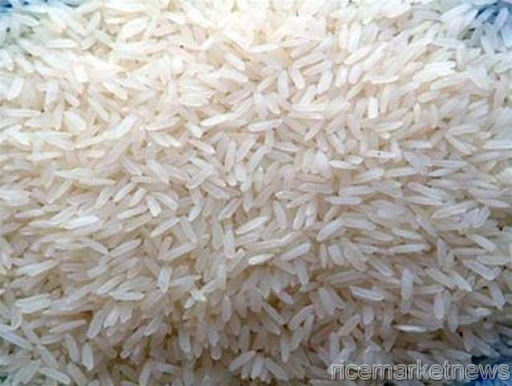 NEW DELHI: India is unlikely to lift ban on export of wheat and non-basmati rice in the wake of high food inflation and food security concerns, the US Department of Agriculture (USDA) has said in its latest report.
India had suspended wheat exports in early 2007 and non basmati rice in 2008 due to high inflation in the country.
"The government of India may continue to ban exports of wheat and non-basmati rice due to ongoing food price inflation and food security concerns," the report said.
Pegging India's wheat output at 83 million tonnes (MT) in 2011-12 marketing year (April-March), the USDA said, "Despite forecasted record production, strong government procurement and abnormally high stocks, the government is unlikely to lift the ban on wheat exports due to continued food inflation concerns".
Currently, food inflation is still ruling high at 10.39 per cent for the week ended February 19.
According to the USDA, with the expected continuation of the export ban , overseas sale of wheat from India in the 2011-12 marketing year would be 3,00,000 tonnes and mostly confined to neighbouring countries like Nepal on humanitarian grounds.
Similarly, rice exports from the country are pegged at 2.5 Million Tonnes (MT) for the current year, which includes basmati rice, premium non-basmati and some concessional exports to neighbouring countries on humanitarian grounds, it said.
The USDA has forecast rice output from India at 94.5 MT, as compared to 89 MT last year. Wheat output in last year was 80.8 MT.
India's domestic wheat and rice demand is estimated at 84.5 MT and 96 MT, respectively for 2011-12 marketing year.
India's wheat ending stocks are seen more than double the government's desired stocks of 7 MT as on March-end of 2011, while rice ending stocks as on October 1, 2011 are expected to be three times higher than the desired stock of 7.2 MT, it said.
Presently, the government's rice procurement is underway and will continue till September 2011.
Wheat purchases would start from next month and total purchases are likely to be higher than 25.5 MT on record output and good MSP, the USDA added.
On domestic prices of these two staples, the USDA said local prices of rice and wheat are expected to remain steady this year on sufficient domestic supplies and expected continuation of the export ban.
Asia rice output threatened by pesticide overuse
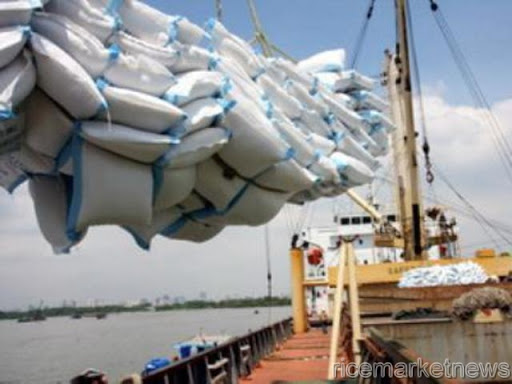 SINGAPORE (AFP) – The unbridled manufacture and use of pesticides in Asia is raising the spectre of "pest storms" devastating the region's rice farms and threatening food security, scientists have warned.
Increased production of cheap pesticides in China and India, lax regulation and inadequate farmer education are destroying ecosystems around paddies, allowing pests to thrive and multiply, they said.
The problem has emerged over the last decade and -- if left unchecked -- pests could lay waste to vast tracts of Asia's rice farms, according to scientists who took part in a workshop in Singapore last week.
"There is increasing concern that the more we use pesticides in rice fields, it is actually making the pest problem worse," Australian scientist George Lukacs told AFP in an interview.
Under pressure to raise yields to meet growing demand, poorly trained farmers tend to be over-reliant on the chemicals.
"There are big outbreaks of pests or what they are calling in China 'pest storms' as a result of the over-application of pesticides," Lukacs said.
Rice is a staple throughout much of Asia, including the world's two most populous countries China and India, making the region vulnerable to soaring food prices and supply problems, economists say.
The UN food agency has said world food prices have already hit record highs and warned oil price spikes caused by upheavals in the Middle East and North Africa could push them even higher.
The Food Price Index, which monitors average monthly price changes for a variety of key staples, rose to 236 points in February from 231 points in January, the Food and Agriculture Organisation (FAO) said.
It was the highest level since the FAO began monitoring prices in 1990.
Lukacs said Asia's rice supply was made more vulnerable by the reliance on a small number of varieties, meaning if a particular pest gets a foothold in a crop, it could spread rapidly.
"In some countries, the majority of rice production is based around two or three varieties of rice, so that actually increases the risk to international food security if there is a big disease out there," he said.
The Singapore workshop was attended by scientists from right across the region, including Australia, India, Japan, Malaysia, the Philippines, Singapore, South Korea and Vietnam.
It was held as part of preparations for next year's meeting in Bucharest of the Ramsar Convention, an inter-governmental treaty on the conservation and wise use of the world's wetlands -- including rice paddies -- and their resources.
Lukacs, a workshop co-organiser, said that in China and other parts of Asia, the unregulated use of chemicals has led to pests developing resistance.
The problem is compounded by indiscriminate application, which has destroyed the ecosystem surrounding the paddies, including the predators such as spiders and dragonflies that would normally keep pest numbers down.
"The predator pressure is gone and the pests don't respond (to pesticides) because they develop resistance very quickly," Lukacs said.
Lukacs, senior principal research scientist with the Australian Centre for Tropical Freshwater Research at James Cook University, said responsibility lies with the pesticide companies, governments and local communities.
Once a pesticide is registered with a country's national authority, there is no monitoring of how it is used, he said.
"(The industry is) remarkably unregulated. Beyond the registration, it's the Wild, Wild West," said Lukacs, who is also the expert on agriculture for the Ramsar Convention's Scientific and Technical Review Panel.
Lukacs and his fellow scientists are calling for closer cooperation among pesticide manufacturers, government regulators and local communities to come up with "best practices" in the production and use of the chemicals.
Pesticide makers must have "stewardship" of their products, while governments and communities should be responsible for regulation as well as training and education of the farmers, he said.
"Responsibility goes beyond just selling the drum, and that means trying to bring regulators, scientists and community members together," he said.
"It's a serious problem and the worst is that we haven't seen the full effects yet."
(Source: http://news.yahoo.com/s/afp/20110306/sc_afp/asiaenvironmentagriculturefood_20110306063907)
Saturday, 5 March 2011
Select grains up on pick up in demand

However, rice basmati common declined on reduced offtake. Traders said fresh buying by stockists on pick up in demand amid slow down in arrivals mainly pushed up select wholesale grains.
Adequate stocks against reduced offtake by retailers and stockists helped rice basmati common prices to decline.
In the national capital, jowar yellow and white rose by Rs 25 and Rs 50 to Rs 900-1,000 and Rs 1,750-1,800, while barley (UP) gained Rs 40 to Rs 1,300-1,320 per quintal.
Maize and bajra also moved up by Rs 10 and Rs 20 to Rs 1,195-1,205 and Rs 845-855 per quintal, respectively.
On the other hand, rice basmati common lacked necessary follow up support and lost Rs 100 to Rs 5,500-5,600 per quintal.
Following are today's quotations in Rs per quintal:
Wheat MP (deshi) 1,710-1,860, wheat dara (for mills) 1,320-1,325 chakki atta (delivery) 1,325-1,330, atta Rajdhani (10 kg) 175, Shakti bhog (10 kg) 175, Roller flour mill 680-700 (50 kg), Maidaa 790-820 (50 kg) and Sooji 820-840 (50 kg)
Basmati rice (Lal Quila) 9,500, Shri Lal Mahal 9,300, super basmati rice 9,000, Basmati common 5,500-5,600, rice Pusa-(1121) 4,200-5,200, Permal raw 1,875-1,925, Permal wand 2,075-2,175, Sela 2,100-2,200 and Rice IR-8 1,775-1,800
Bajra 845-855, Jowar yellow 900-1000, white 1,750-1,800, Maize 1,195-1,205, Barley (UP) 1,300-1,320 and Rajasthan 1,080-1,090
(Source: http://www.business-standard.com/india/news/select-grains-uppickin-demand/127936/&tp=on)
Rice exports reach record high
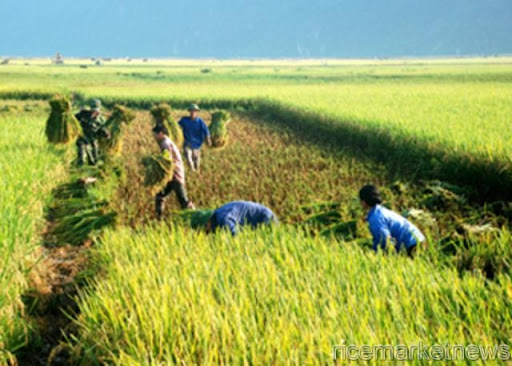 HCM CITY— Viet Nam exported 1.1 million tonnes of rice in January and February, a record amount, according to the Viet Nam Food Association (VFA).
Earnings were US$592 million, a 44.5 per cent increase compared to the same period last year.
This also marks a year-on-year increase of 55.6 per cent in volume.
Farmers are selling rice for VND5,000 to VND5,200 per kilo directly at paddy fields, and dried paddy for VND5,800 to VND6,200 per kilo.
Rice paddy prices were on the rise following the VFA's decision to purchase 1 million tonnes of rice for reserve beginning on March 1.
They were VND50 to VND100 per kilo higher compared with last week.
Recent sunny weather has also created favourable conditions for farmers in the Mekong provinces of An Giang, Dong Thap, Hau Giang, Kien Giang and Vinh Long, as well as Can Tho City.
The weather has allowed them to dry paddy harvested from the winter-spring crop.
Dr Le Van Banh, head of the Mekong Delta Institute for Rice Research, said Mekong farmers had harvested 400,000ha of the 1.6 million hectares under the winter-spring crop.
The average yield of this year's winter-spring crop stands at 6.5-7.2 tonnes per hectare.
Mekong farmers expect to harvest 10 million tonnes of paddy from this winter-spring crop.
Banh added that with the current high paddy prices, Mekong farmers could earn profits up to 60 per cent from the sale of paddy in their winter-spring crops.
Le Van Hai, a farmer from Tan Thanh Commune of Can Tho City's Thoi Lai District, said he could earn profits of VND15-VND20 million (US$714-952) from each hectare of his winter-spring crop.
The farmers' increasing use of combine harvesters has made work easier.
"These machines help us harvest the crop and pack the paddy into bags. We just wait for buyers to weigh the paddy and pay us for the crop," said Hai. —VNS
(Source: http://vietnamnews.vnanet.vn/Economy/209000/Rice-exports-reach-record-high.html)
Rice prices may spike up despite better harvests
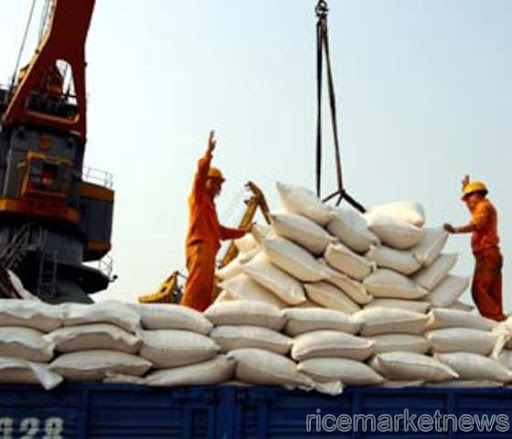 THE price of rice, the staple for half the world, may advance as consumers seek cheaper substitutes to wheat products and if drought spreads to China’s growing regions, according to the Laguna-based International Rice Research Institute.
“If drought in China continues, that would affect rice lands,” director-general Robert Zeigler said in a Bloomberg Television interview Friday.
The good news is that the country expects a “good summer harvest” that will help rice imports to less than 1 million tons this year, Agriculture Secretary Proceso Alcala says.
According to government estimates, rough rice production for the first semester may reach more than 7.6 million tons, 15 percent more than last year’s harvest of 6.6 million tons in the same six-month period.
The increase may be attributed to increased areas for rice farming by 9.6 percent.
Rice has lagged gains in other grains that helped to push global food costs to a record last month, according to a gauge from the Food and Agriculture Organization.
Rice might be “the commodity which is separating us from a food crisis,” FAO senior economist Abdolreza Abbassian said.
“There’s going to be steady upward pressure on rice prices, along with other commodities,”Zeigler said.
“The status of rice supply, being the number-one food staple, is going to have a major impact.”
Rough-rice futures gained 6.9 percent in the past year, compared with wheat’s 65-percent gain, narrowing the price difference between the two. Rice was at $14.18 per 100 pounds Friday, while wheat traded at $8.2725 per bushel. That wheat price is equivalent to about $13.79 per 100 pounds.
“Rice typically lags behind wheat prices by a few months,” Zeigler said.
“As people substitute rice for wheat, that just increases demand” for rice.
Global rough-rice production was forecast to rise to a record 700.7 million metric tons in 2010-2011, exceeding demand by more than 6 million tons, the FAO said last month. That compares with production deficits seen in wheat and corn.
(Source: http://www.manilastandardtoday.com/insideNews.htm?f=2011/march/5/news4.isx&d=2011/march/5)
Myanmar Puts Lid on Its Rice Exports
SINGAPORE-Myanmar halted rice exports to keep prices under local control, a senior industry official said Thursday as the country faces a bruising round of inflation.
The suspension is expected to create major dislocations in the market of Asia's most important foods in large part because Myanmar is a major exporter of the crop. Still, he stressed that governments are nervous about the cost of food, which helped trigger the riots in the Middle East.
Economists are particularly careful about the possible proliferation of bans on agricultural exports, fearing it could drive prices even higher in international markets. The steps are very popular with some governments when food costs are rising, as they are now, because they help ensure a supply of suitable premises, keeping domestic prices low. But also often lead to higher costs elsewhere as buyers are forced to find new sources.
A round of export bans in 2008 helped contribute to a dramatic increase in food prices this year, while the Russian ban on exports of wheat last summer also helped send prices climbing this crop .
According to the United Nations Organization and Agriculture Organization, the global food prices in February rose 2.2% monthly increase in January, the eighth in a row at the highest level in real and nominal terms since the agency began tracking prices in 1990. And the volatility of oil prices, the FAO warned, could lead to its index even higher. World grain supplies are also expected to push hard this year due to low stock levels.
With the increase in world food prices to a record, Myanmar has halted rice exports to try to keep prices under local control. Jake Wall Street Journal, Lee and Echoes of Asia in the street Mohammed Hadi Editor discuss how Asian countries are facing.
Myanmar remains a relatively small player in world rice trade, the export of up to one million tonnes a year in a global export market of around 30 million tonnes. Rice prices have remained relatively low compared with other grains this year, and traders now expect no export crop powers, including Thailand and Vietnam, to announce important limits on their exports.
Global rice supply is ample, due to large crops in Vietnam and Thailand, said Chookiat Ophaswongse, director general of the major Thai rice exporters Huaychuan Co. Mr. Chookiat said Thailand expects a record rice harvest of two million high school tons next month, after producing a larger crop in December, while rice production in Vietnam is likely to be a record 25 million tons this year. The two countries together represent approximately 50% of global rice trade.

Myanmar's movement, however, reflects the tensions in this poor nation of 50 million people, whose military-backed government is widely accused of human rights violations and has long been afraid of the risk of popular revolt. The higher consumer prices helped trigger mass protests led by monks there in 2007, which the military brutally suppressed.
Traders said the ban came after Myanmar domestic prices of some grades of rice rose around 15% last month, partly due to increased fuel prices. The higher costs of fuel and transportation, with increased fuel prices by over 40% in the last three weeks have driven up grain prices, said a trader based in Yangon commodity.
The ban on exports from Myanmar into force and will lunes25 at least until late April, said an executive committee member of the Association of Myanmar's rice industry.
It was not possible to reach anyone with the government of Myanmar, who rarely speaks to foreign journalists.
The ban means that the planned shipment this month from about 90,000 metric tons of rice to Bangladesh and African countries will be delayed until Myanmar decides to resume exports, traders said. The seed is the cheapest in the world, with 25% broken popular seniors who offered about $ 400 to $ 410 per tonne. The country has sent about 200. 000 tonnes of rice from the harvest before the export ban took effect.
A trader said that even the transfer of licenses that were issued before the exporters are uncertain and may have to declare a force majeure on some shipments. This statement provides legal protection to suppliers if they can not guarantee delivery.
The ban is not expected to have much impact on world prices, however, as buyers in Africa and Bangladesh can be obtained from other sources of rice to slightly higher prices. 25% broken rice from Vietnam is currently offered in about $ 420 per tonne, while the same grade of Thai rice is offered to about $ 470 per tonne.
The export ban has already had an impact on domestic prices, however. The cost of a bag of 20 kilos of grain of inferior quality has been reduced to 1. 000 Myanmar kyat ($ 153) to 12,600 kyat from last week, when the prices of intermediate and high quality remain high, dealers said.
the Myanmar rice exports in 2010 were reduced by almost half from 2009, to 500,000 tonnes from 900,000 tonnes, according to estimates by the International Grains Council.
Myanmar temporarily stopped rice exports in January 2010 and the licensing pace was slow, even after deliveries resumed.

(Source: http://online.wsj.com/article/SB10001424052748703300904576178083353231872.html)
Wednesday, 2 March 2011
Rice supply good for 103 days
MANILA, Philippines - The country's rice supply as of Feb. 25 stands at 3.195 million metric tons which can feed the entire population by over a hundred days, National Food Authority (NFA) administrator Angelito Banayo said yesterday. The NFA itself has total stocks of 1.558 million MT, which is equivalent to 50 days supply, while commercial rice dealers, wholesalers, retailers hold 488,300 MT
Cotton Futures Top $2 a Pound as Limited Worldwide Supplies Trail Demand


 http://bit.ly/fztwOo
Cotton South Africa Reduces 2010-11 Production Estimate by 3%


 http://bit.ly/eFhk9j
Cotton prices rise after last week's fall


 http://bit.ly/fHbZkA
Sasini of Kenya Falls to One-Year Low as Tea, Coffee Prices Drop


 http://bit.ly/hgQsId
Cotton price to remain firm despite record harvest


 http://bit.ly/gSL9TK
Cocoa traders demand circuit breakers


Rains lift world coffee prices; PHL follows rise


 http://bit.ly/hVuF5P
Rice supply good for 103 days
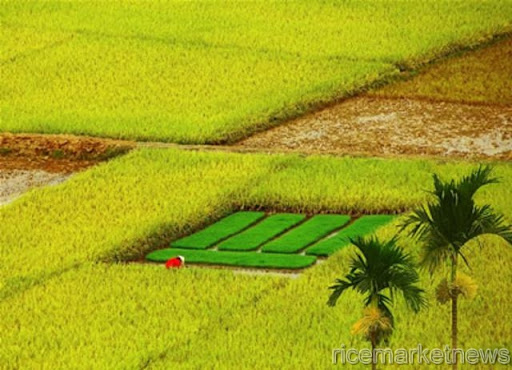 MANILA, Philippines - The country’s rice supply as of Feb. 25 stands at 3.195 million metric tons which can feed the entire population by over a hundred days, National Food Authority (NFA) administrator Angelito Banayo said yesterday.
The NFA itself has total stocks of 1.558 million MT, which is equivalent to 50 days supply, while commercial rice dealers, wholesalers, retailers hold 488,300 MT – which is equivalent to 16 days
Households, according to NFA estimates, hold 1.138 million MT – which is equivalent to 37days.
With an estimated daily consumption is 31,000 MT, the total rice inventory of 3.195 million MT is calculated to last for 103 days.
The NFA awaits the Department of Finance’s approval of the NFA Council’s rice importation recommendation on the use of the Tax Expenditure Fund (TEF) by the private sector for the importation of 600,000 MT and 60,000 MT by small farmer cooperatives.
The NFA will import an additional 200,000 MT through a public bidding.
Banayo said the Fiscal Incentives Review Board (FIRB) under the DOF has not yet approved the proposal of the NFA Council concerning the country’s rice importation for 2011.
“Until the FIRB approves (the NFA Council’s) proposal, we cannot yet schedule the bidding for imported rice,” Banayo said.
Banayo hopes that the additional rice stocks can be imported into the country before the lean season starts in July this year.
The targeted rice arrival before July, Banayo said, would only be possible if bidding for the imported rice could be done this March.
(Source: http://www.abs-cbnnews.com/business/03/02/11/rice-supply-good-103-days)
ASEAN makes pact on rice reserves
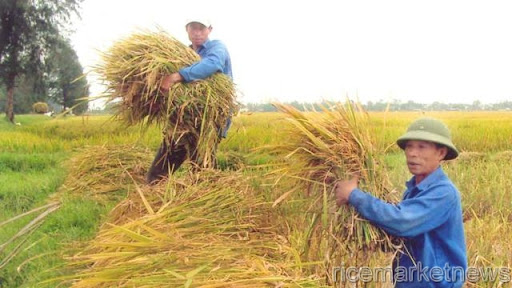 HCM CITY - The 10 members of the Association of Southeast Asian Nations and their dialogue partners, China, Japan and South Korea have agreed to establish rice reserves in each country.
To prevent a repeat of the mistakes made during the 2008 food crisis, they agreed to stabilise the rice prices without making "sudden and demonstrative procurements" that could trigger panic among trade members.
The ASEAN trade ministers finished their two-day meeting in Vientiane last Sunday with a commitment to help each other build rice reserves to settle price fluctuation in the commodity while keeping an eye on the impact of the Middle East crisis on oil prices, the Jakarta Post newspaper reported.
Addressing a joint press conference at the end of the meeting, Indonesian Trade Minister Mari Elka Pangestu, who chaired the meeting, said the ASEAN governments had agreed to sign the ASEAN-plus-3 rice reserve agreement in early October, "during our chairmanship" of ASEAN.
Under the agreement, ASEAN and the three partners would contribute 787,000 tonnes for the rice reserve, with all ASEAN members contributing a total of 87,000 tonnes, Japan 250,000 tonnes, China 300,000 tonnes and South Korea 150,000 tonnes.
Indonesia will contribute 25,000 tonnes to the reserve.
According to the UN Food and Agriculture Organisation, food prices went up by 3.4 per cent from December and to its highest level since 1990. Meanwhile, the World Bank's food price index shows a 15 per cent increase in food prices between October 2010 and January 2011, only 3 per cent below its 2008 peak.
Mari warned ASEAN countries not to repeat the experience in 2008 when Viet Nam suddenly limited its rice export and the Philippines rushed to buy up stocks.
"We should refrain from steps that cause panic and disruption," Mari was quoted by the Jakarta Post as saying.
ASEAN trade ministers also discussed the issue of increasing energy prices, including the possible inflationary impact of political crises in the Middle East, especially Libya.
ASEAN Secretary-General Surin Pitsuwan said more discussions were needed on the Middle East crisis and its impact on oil and gas prices.
(Source: http://news.asiaone.com/News/Latest%2BNews/Asia/Story/A1Story20110302-266087.html)
Nigeria cocoa exports drop 18 pct by Dec 31


Coffee Prices Jump to Highest Level in Over a Decade


 http://bit.ly/eA7Ktj
Cocoa flash crash, Rule 201 and the Bernank


Cotton Prices Extend Rally as China Demand Seen Tightening Global Supplies


 http://bit.ly/hoBXdq
Cocoa may rise


China 2010 cotton output falls by 6.3 percent


 http://bit.ly/fxG4Fx


