Saturday, 5 March 2011
Select grains up on pick up in demand

However, rice basmati common declined on reduced offtake. Traders said fresh buying by stockists on pick up in demand amid slow down in arrivals mainly pushed up select wholesale grains.
Adequate stocks against reduced offtake by retailers and stockists helped rice basmati common prices to decline.
In the national capital, jowar yellow and white rose by Rs 25 and Rs 50 to Rs 900-1,000 and Rs 1,750-1,800, while barley (UP) gained Rs 40 to Rs 1,300-1,320 per quintal.
Maize and bajra also moved up by Rs 10 and Rs 20 to Rs 1,195-1,205 and Rs 845-855 per quintal, respectively.
On the other hand, rice basmati common lacked necessary follow up support and lost Rs 100 to Rs 5,500-5,600 per quintal.
Following are today's quotations in Rs per quintal:
Wheat MP (deshi) 1,710-1,860, wheat dara (for mills) 1,320-1,325 chakki atta (delivery) 1,325-1,330, atta Rajdhani (10 kg) 175, Shakti bhog (10 kg) 175, Roller flour mill 680-700 (50 kg), Maidaa 790-820 (50 kg) and Sooji 820-840 (50 kg)
Basmati rice (Lal Quila) 9,500, Shri Lal Mahal 9,300, super basmati rice 9,000, Basmati common 5,500-5,600, rice Pusa-(1121) 4,200-5,200, Permal raw 1,875-1,925, Permal wand 2,075-2,175, Sela 2,100-2,200 and Rice IR-8 1,775-1,800
Bajra 845-855, Jowar yellow 900-1000, white 1,750-1,800, Maize 1,195-1,205, Barley (UP) 1,300-1,320 and Rajasthan 1,080-1,090
(Source: http://www.business-standard.com/india/news/select-grains-uppickin-demand/127936/&tp=on)
Rice exports reach record high
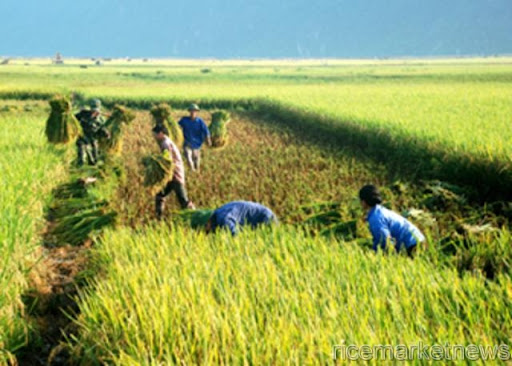 HCM CITY— Viet Nam exported 1.1 million tonnes of rice in January and February, a record amount, according to the Viet Nam Food Association (VFA).
Earnings were US$592 million, a 44.5 per cent increase compared to the same period last year.
This also marks a year-on-year increase of 55.6 per cent in volume.
Farmers are selling rice for VND5,000 to VND5,200 per kilo directly at paddy fields, and dried paddy for VND5,800 to VND6,200 per kilo.
Rice paddy prices were on the rise following the VFA's decision to purchase 1 million tonnes of rice for reserve beginning on March 1.
They were VND50 to VND100 per kilo higher compared with last week.
Recent sunny weather has also created favourable conditions for farmers in the Mekong provinces of An Giang, Dong Thap, Hau Giang, Kien Giang and Vinh Long, as well as Can Tho City.
The weather has allowed them to dry paddy harvested from the winter-spring crop.
Dr Le Van Banh, head of the Mekong Delta Institute for Rice Research, said Mekong farmers had harvested 400,000ha of the 1.6 million hectares under the winter-spring crop.
The average yield of this year's winter-spring crop stands at 6.5-7.2 tonnes per hectare.
Mekong farmers expect to harvest 10 million tonnes of paddy from this winter-spring crop.
Banh added that with the current high paddy prices, Mekong farmers could earn profits up to 60 per cent from the sale of paddy in their winter-spring crops.
Le Van Hai, a farmer from Tan Thanh Commune of Can Tho City's Thoi Lai District, said he could earn profits of VND15-VND20 million (US$714-952) from each hectare of his winter-spring crop.
The farmers' increasing use of combine harvesters has made work easier.
"These machines help us harvest the crop and pack the paddy into bags. We just wait for buyers to weigh the paddy and pay us for the crop," said Hai. —VNS
(Source: http://vietnamnews.vnanet.vn/Economy/209000/Rice-exports-reach-record-high.html)
Rice prices may spike up despite better harvests
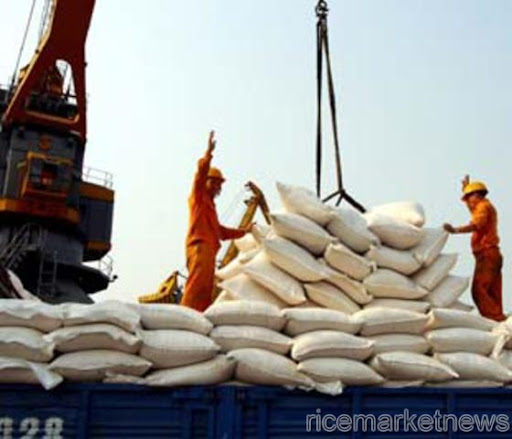 THE price of rice, the staple for half the world, may advance as consumers seek cheaper substitutes to wheat products and if drought spreads to China’s growing regions, according to the Laguna-based International Rice Research Institute.
“If drought in China continues, that would affect rice lands,” director-general Robert Zeigler said in a Bloomberg Television interview Friday.
The good news is that the country expects a “good summer harvest” that will help rice imports to less than 1 million tons this year, Agriculture Secretary Proceso Alcala says.
According to government estimates, rough rice production for the first semester may reach more than 7.6 million tons, 15 percent more than last year’s harvest of 6.6 million tons in the same six-month period.
The increase may be attributed to increased areas for rice farming by 9.6 percent.
Rice has lagged gains in other grains that helped to push global food costs to a record last month, according to a gauge from the Food and Agriculture Organization.
Rice might be “the commodity which is separating us from a food crisis,” FAO senior economist Abdolreza Abbassian said.
“There’s going to be steady upward pressure on rice prices, along with other commodities,”Zeigler said.
“The status of rice supply, being the number-one food staple, is going to have a major impact.”
Rough-rice futures gained 6.9 percent in the past year, compared with wheat’s 65-percent gain, narrowing the price difference between the two. Rice was at $14.18 per 100 pounds Friday, while wheat traded at $8.2725 per bushel. That wheat price is equivalent to about $13.79 per 100 pounds.
“Rice typically lags behind wheat prices by a few months,” Zeigler said.
“As people substitute rice for wheat, that just increases demand” for rice.
Global rough-rice production was forecast to rise to a record 700.7 million metric tons in 2010-2011, exceeding demand by more than 6 million tons, the FAO said last month. That compares with production deficits seen in wheat and corn.
(Source: http://www.manilastandardtoday.com/insideNews.htm?f=2011/march/5/news4.isx&d=2011/march/5)
Myanmar Puts Lid on Its Rice Exports
SINGAPORE-Myanmar halted rice exports to keep prices under local control, a senior industry official said Thursday as the country faces a bruising round of inflation.
The suspension is expected to create major dislocations in the market of Asia's most important foods in large part because Myanmar is a major exporter of the crop. Still, he stressed that governments are nervous about the cost of food, which helped trigger the riots in the Middle East.
Economists are particularly careful about the possible proliferation of bans on agricultural exports, fearing it could drive prices even higher in international markets. The steps are very popular with some governments when food costs are rising, as they are now, because they help ensure a supply of suitable premises, keeping domestic prices low. But also often lead to higher costs elsewhere as buyers are forced to find new sources.
A round of export bans in 2008 helped contribute to a dramatic increase in food prices this year, while the Russian ban on exports of wheat last summer also helped send prices climbing this crop .
According to the United Nations Organization and Agriculture Organization, the global food prices in February rose 2.2% monthly increase in January, the eighth in a row at the highest level in real and nominal terms since the agency began tracking prices in 1990. And the volatility of oil prices, the FAO warned, could lead to its index even higher. World grain supplies are also expected to push hard this year due to low stock levels.
With the increase in world food prices to a record, Myanmar has halted rice exports to try to keep prices under local control. Jake Wall Street Journal, Lee and Echoes of Asia in the street Mohammed Hadi Editor discuss how Asian countries are facing.
Myanmar remains a relatively small player in world rice trade, the export of up to one million tonnes a year in a global export market of around 30 million tonnes. Rice prices have remained relatively low compared with other grains this year, and traders now expect no export crop powers, including Thailand and Vietnam, to announce important limits on their exports.
Global rice supply is ample, due to large crops in Vietnam and Thailand, said Chookiat Ophaswongse, director general of the major Thai rice exporters Huaychuan Co. Mr. Chookiat said Thailand expects a record rice harvest of two million high school tons next month, after producing a larger crop in December, while rice production in Vietnam is likely to be a record 25 million tons this year. The two countries together represent approximately 50% of global rice trade.

Myanmar's movement, however, reflects the tensions in this poor nation of 50 million people, whose military-backed government is widely accused of human rights violations and has long been afraid of the risk of popular revolt. The higher consumer prices helped trigger mass protests led by monks there in 2007, which the military brutally suppressed.
Traders said the ban came after Myanmar domestic prices of some grades of rice rose around 15% last month, partly due to increased fuel prices. The higher costs of fuel and transportation, with increased fuel prices by over 40% in the last three weeks have driven up grain prices, said a trader based in Yangon commodity.
The ban on exports from Myanmar into force and will lunes25 at least until late April, said an executive committee member of the Association of Myanmar's rice industry.
It was not possible to reach anyone with the government of Myanmar, who rarely speaks to foreign journalists.
The ban means that the planned shipment this month from about 90,000 metric tons of rice to Bangladesh and African countries will be delayed until Myanmar decides to resume exports, traders said. The seed is the cheapest in the world, with 25% broken popular seniors who offered about $ 400 to $ 410 per tonne. The country has sent about 200. 000 tonnes of rice from the harvest before the export ban took effect.
A trader said that even the transfer of licenses that were issued before the exporters are uncertain and may have to declare a force majeure on some shipments. This statement provides legal protection to suppliers if they can not guarantee delivery.
The ban is not expected to have much impact on world prices, however, as buyers in Africa and Bangladesh can be obtained from other sources of rice to slightly higher prices. 25% broken rice from Vietnam is currently offered in about $ 420 per tonne, while the same grade of Thai rice is offered to about $ 470 per tonne.
The export ban has already had an impact on domestic prices, however. The cost of a bag of 20 kilos of grain of inferior quality has been reduced to 1. 000 Myanmar kyat ($ 153) to 12,600 kyat from last week, when the prices of intermediate and high quality remain high, dealers said.
the Myanmar rice exports in 2010 were reduced by almost half from 2009, to 500,000 tonnes from 900,000 tonnes, according to estimates by the International Grains Council.
Myanmar temporarily stopped rice exports in January 2010 and the licensing pace was slow, even after deliveries resumed.

(Source: http://online.wsj.com/article/SB10001424052748703300904576178083353231872.html)
Wednesday, 2 March 2011
Rice supply good for 103 days
MANILA, Philippines - The country's rice supply as of Feb. 25 stands at 3.195 million metric tons which can feed the entire population by over a hundred days, National Food Authority (NFA) administrator Angelito Banayo said yesterday. The NFA itself has total stocks of 1.558 million MT, which is equivalent to 50 days supply, while commercial rice dealers, wholesalers, retailers hold 488,300 MT
Cotton Futures Top $2 a Pound as Limited Worldwide Supplies Trail Demand


 http://bit.ly/fztwOo
Cotton South Africa Reduces 2010-11 Production Estimate by 3%


 http://bit.ly/eFhk9j
Cotton prices rise after last week's fall


 http://bit.ly/fHbZkA
Sasini of Kenya Falls to One-Year Low as Tea, Coffee Prices Drop


 http://bit.ly/hgQsId
Cotton price to remain firm despite record harvest


 http://bit.ly/gSL9TK
Cocoa traders demand circuit breakers


Rains lift world coffee prices; PHL follows rise


 http://bit.ly/hVuF5P
Rice supply good for 103 days
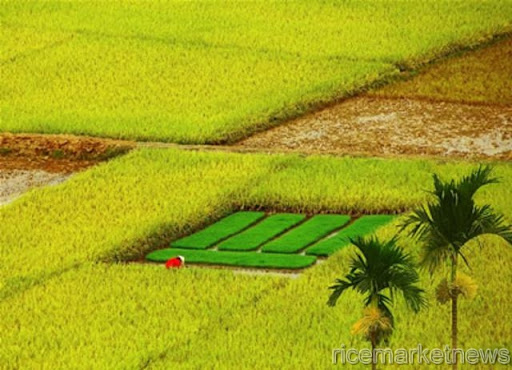 MANILA, Philippines - The country’s rice supply as of Feb. 25 stands at 3.195 million metric tons which can feed the entire population by over a hundred days, National Food Authority (NFA) administrator Angelito Banayo said yesterday.
The NFA itself has total stocks of 1.558 million MT, which is equivalent to 50 days supply, while commercial rice dealers, wholesalers, retailers hold 488,300 MT – which is equivalent to 16 days
Households, according to NFA estimates, hold 1.138 million MT – which is equivalent to 37days.
With an estimated daily consumption is 31,000 MT, the total rice inventory of 3.195 million MT is calculated to last for 103 days.
The NFA awaits the Department of Finance’s approval of the NFA Council’s rice importation recommendation on the use of the Tax Expenditure Fund (TEF) by the private sector for the importation of 600,000 MT and 60,000 MT by small farmer cooperatives.
The NFA will import an additional 200,000 MT through a public bidding.
Banayo said the Fiscal Incentives Review Board (FIRB) under the DOF has not yet approved the proposal of the NFA Council concerning the country’s rice importation for 2011.
“Until the FIRB approves (the NFA Council’s) proposal, we cannot yet schedule the bidding for imported rice,” Banayo said.
Banayo hopes that the additional rice stocks can be imported into the country before the lean season starts in July this year.
The targeted rice arrival before July, Banayo said, would only be possible if bidding for the imported rice could be done this March.
(Source: http://www.abs-cbnnews.com/business/03/02/11/rice-supply-good-103-days)
ASEAN makes pact on rice reserves
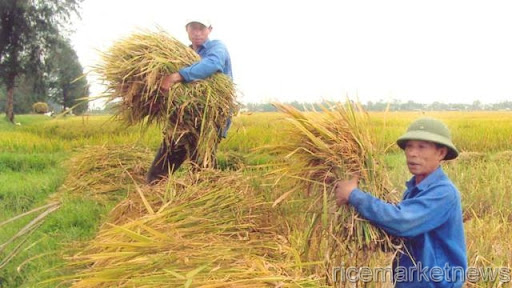 HCM CITY - The 10 members of the Association of Southeast Asian Nations and their dialogue partners, China, Japan and South Korea have agreed to establish rice reserves in each country.
To prevent a repeat of the mistakes made during the 2008 food crisis, they agreed to stabilise the rice prices without making "sudden and demonstrative procurements" that could trigger panic among trade members.
The ASEAN trade ministers finished their two-day meeting in Vientiane last Sunday with a commitment to help each other build rice reserves to settle price fluctuation in the commodity while keeping an eye on the impact of the Middle East crisis on oil prices, the Jakarta Post newspaper reported.
Addressing a joint press conference at the end of the meeting, Indonesian Trade Minister Mari Elka Pangestu, who chaired the meeting, said the ASEAN governments had agreed to sign the ASEAN-plus-3 rice reserve agreement in early October, "during our chairmanship" of ASEAN.
Under the agreement, ASEAN and the three partners would contribute 787,000 tonnes for the rice reserve, with all ASEAN members contributing a total of 87,000 tonnes, Japan 250,000 tonnes, China 300,000 tonnes and South Korea 150,000 tonnes.
Indonesia will contribute 25,000 tonnes to the reserve.
According to the UN Food and Agriculture Organisation, food prices went up by 3.4 per cent from December and to its highest level since 1990. Meanwhile, the World Bank's food price index shows a 15 per cent increase in food prices between October 2010 and January 2011, only 3 per cent below its 2008 peak.
Mari warned ASEAN countries not to repeat the experience in 2008 when Viet Nam suddenly limited its rice export and the Philippines rushed to buy up stocks.
"We should refrain from steps that cause panic and disruption," Mari was quoted by the Jakarta Post as saying.
ASEAN trade ministers also discussed the issue of increasing energy prices, including the possible inflationary impact of political crises in the Middle East, especially Libya.
ASEAN Secretary-General Surin Pitsuwan said more discussions were needed on the Middle East crisis and its impact on oil and gas prices.
(Source: http://news.asiaone.com/News/Latest%2BNews/Asia/Story/A1Story20110302-266087.html)
Nigeria cocoa exports drop 18 pct by Dec 31


Coffee Prices Jump to Highest Level in Over a Decade


 http://bit.ly/eA7Ktj
Cocoa flash crash, Rule 201 and the Bernank


Cotton Prices Extend Rally as China Demand Seen Tightening Global Supplies


 http://bit.ly/hoBXdq
Cocoa may rise


China 2010 cotton output falls by 6.3 percent


 http://bit.ly/fxG4Fx


